Why walnut and maple are ideal woods for chessboards
The chessboard is simple in its basic form: 64 squares in a fixed pattern of light and dark squares. The shape has remained largely unchanged over the centuries. Yet the material itself is not without importance. The type of wood affects both the appearance, durability and how the board is experienced in use.
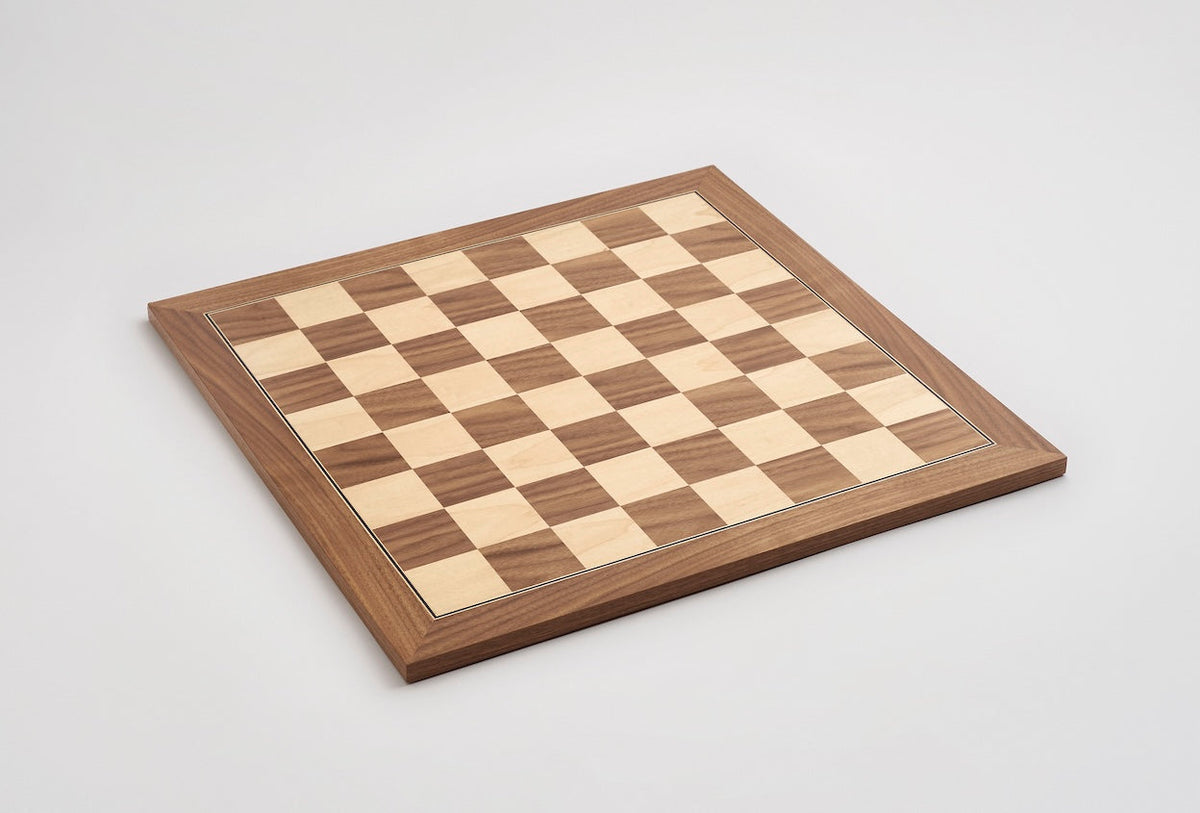
Chess boards are made from many different materials and types of wood. Some are made from plastic, others from glass, metal or stone. There are also many options when it comes to wood alone. However, the combination of walnut and maple is particularly popular among chess enthusiasts. It provides a clear contrast between the squares, a calm visual expression and a durable surface that is well suited to daily use.
In this article, we take a closer look at what makes these two types of wood suitable for chessboards.
Walnut and maple as wood types
Walnut and maple are clearly different from each other, both in color and texture, and that is precisely one of the reasons why they work well together.
Maple is a light wood with a relatively even structure. The color is typically in light cream or honey tones, and the surface appears clean and uniform. This makes maple suitable for the light squares of a chessboard, because the wood provides clarity without appearing sharp.
Walnut is darker and has a deeper color palette. The tones range from medium brown to dark chocolate brown. At the same time, the wood often has a distinct grain pattern, which gives the surface variety and depth.
Both types of wood are relatively stable and durable, making them well-suited for objects that are used repeatedly, such as furniture, tabletops, and chessboards.
Walnut – color and texture
Walnut is often used for the dark squares on a chessboard. The wood has a dark brown tone that provides a clear contrast to the light squares of maple without appearing completely black.
One of the characteristics that makes walnut suitable for this function is the depth of the wood's color. The color is dark but still warm, and the variation in the grain gives the surface character without making the fields uneasy.
Walnut is also used in many other contexts, including furniture and interiors, where a dark wood with a relatively calm structure is desired. The wood also ages relatively evenly and develops a more mature and uniform tone over time.
These properties make walnut suitable for chessboards, where both clarity and a harmonious expression are important.
Walnut and maple in checkerboards
When walnut and maple are combined in a chessboard, a clear division between the dark and light squares is created, making the board easy to read during play.
At the same time, the combination gives a visually balanced expression. The light fields in maple appear clear and calm, while the darker fields in walnut add depth to the board.
There are also other types of wood in the chess world. Rosewood, for example, is used in many Indian chess sets and has a darker and more distinctive color. Ebony is almost black and is often used in more exclusive chess pieces.
The pieces themselves are often made of different types of wood than the board. A classic combination is boxwood for the light pieces and a darker type of wood for the black ones. In many sets, boxwood is used together with rosewood or acacia. Boxwood is particularly suitable for chess pieces because the wood is dense and even in structure, which makes it possible to turn the characteristic Staunton shapes very precisely.
In some smaller or foldable chess sets, boxwood is used for the light pieces and acacia for the dark ones. Acacia has a warm dark tone and is also robust, making it suitable for compact sets.
A classic choice for chessboards
There are many ways to make a chessboard, and many different types of wood can be used. However, the combination of walnut and maple has become a familiar choice among many chess players.
Walnut gives the dark fields a warm and deep tone, while maple creates clear and bright fields. Together, they create a board that is both easy to play and visually balanced.
Therefore, the combination is still used in many chess boards – both at home and in more serious playing contexts.