The Match of the Century: When Chess Came to Reykjavik in 1972
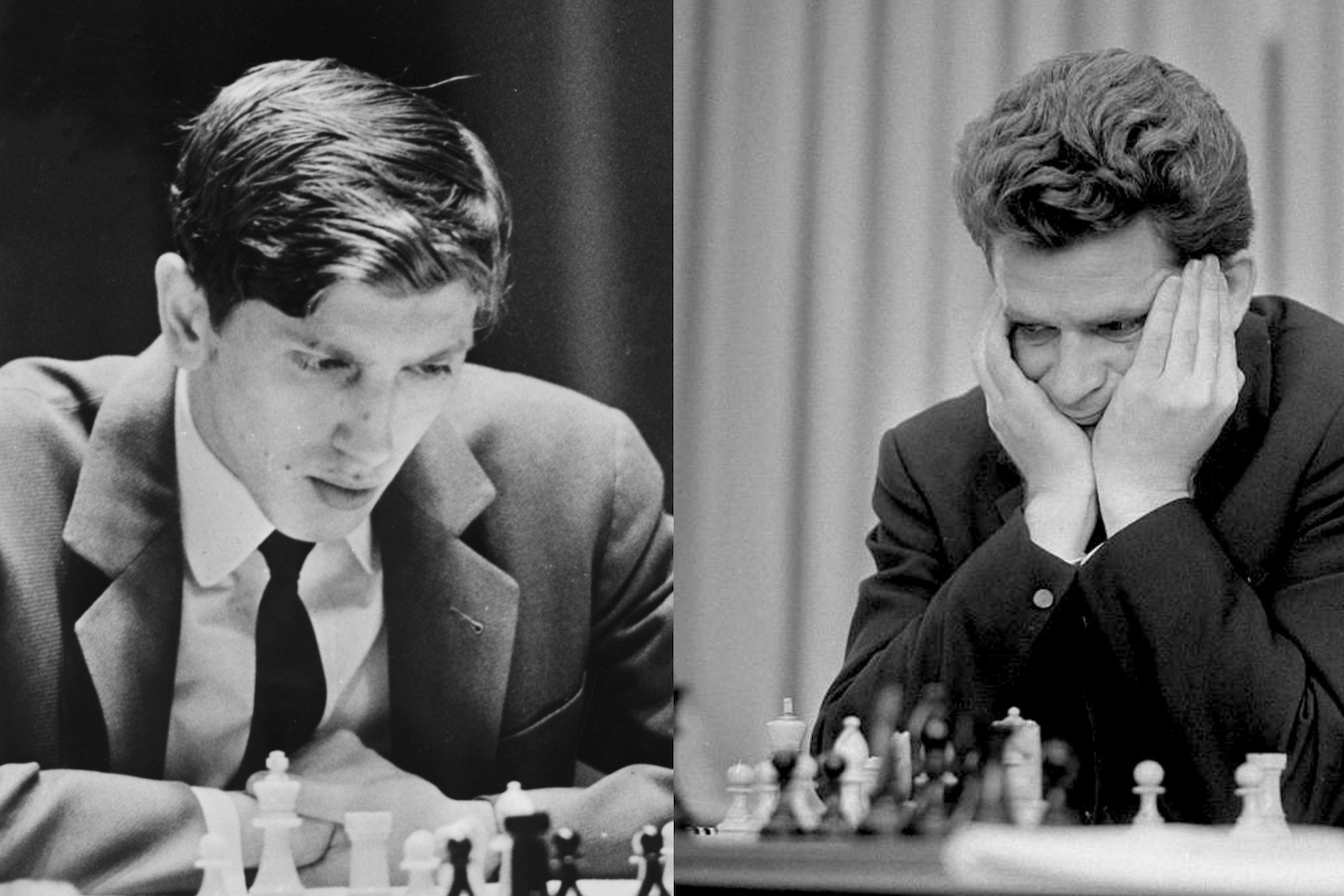
There are events in history that become larger than what they immediately concern. In the summer of 1972, two men sat down at a chessboard in an Icelandic sports hall. It wasn't just a world championship. It was the Cold War reduced to 64 squares.
And the whole world watched.
The Man from Brooklyn
Robert James Fischer was born on March 9, 1943, in Chicago. His mother, Regina, was an independent and politically active woman who spoke six languages and held a PhD in haematology. His father left the family when Bobby was two years old. He spent most of his childhood in modest apartments in Brooklyn.
In March 1949 – Bobby was six years old – his sister Joan came home with a chess set from a candy store. She taught him the rules from the instruction booklet. She soon lost interest. Bobby did not.
He taught himself to play against himself. His mother grew worried about his isolation. In November 1950, she sent a postcard to the Brooklyn Eagle with an ad seeking other children who might want to play chess with her son. The newspaper didn't know which section to put it in and rejected it – but forwarded it to Hermann Helms, "the dean of American chess", who arranged for Bobby to meet stronger players.
That changed everything.
At 13, Fischer played what is still referred to as "the Game of the Century" – not the 1972 match, but a single game against International Master Donald Byrne at the Rosenwald Tournament in 1956, where the 13-year-old sacrificed his queen in a wild combination that shocked the entire chess world. At 14, he became the youngest US champion ever. At 15, he became a grandmaster – the youngest in history at the time.
He dropped out of high school at 16. To a journalist he said: "You don't learn anything in school." He taught himself Russian so he could read Soviet chess journals in the original.
Fischer wasn't just a chess player. He was a force of nature. And he stood alone.
The Red Machine
Since 1948, Soviet players had won every single world chess championship. It was no coincidence. It was a system.
In the Soviet Union, chess was not just a game. It was ideology. The state financed players, coaches and analysts. Grandmasters were state employees with privileges and access to resources no Western player could dream of. Spassky travelled to Reykjavik with an entire team behind him: seconds Efim Geller, Nikolai Krogius and Iivo Nei, a professional psychologist, and a staff of analysts working through the night.
Fischer arrived with one second: William Lombardy, a mild-mannered grandmaster and Catholic priest.
Before the match, Fischer had never won a single game against Spassky. They had played five games. Fischer lost three and drew two.
On paper, it didn't look like a fair contest. It looked like an execution.
The Road to Reykjavik
Fischer qualified for the world championship match through a candidates series still considered one of the most extreme performances in chess history. He defeated Mark Taimanov 6–0. He defeated Bent Larsen 6–0. He won 20 consecutive games against some of the world's best players. Nothing like it had been seen before.
But Fischer was Fischer. Even with everything pointing toward Reykjavik, there was no guarantee he would actually show up.
His demands grew in the weeks leading up to the match. The prize money was too low. The cameras would disturb him. The chairs were wrong. The acoustics in the playing hall were poor.
The opening ceremony took place without him.
On July 4, 1972 – American Independence Day – Fischer finally landed in Reykjavik. Two days late. The prize fund had been doubled. And Henry Kissinger, the US Secretary of State, had personally called Fischer and said: "Bobby, America wants you to go over there and beat the Russians."
The 21 Games
Game 1: The Disaster
July 11, 1972. Laugardalshöll – Iceland's largest sports arena, seating 5,500. The same hall where Led Zeppelin, Leonard Cohen and David Bowie had performed.
Fischer had White. He grabbed a pawn in a position most grandmasters would have dismissed as far too risky. It cost him the game. Spassky won.
It was a disaster. But no one knew it was the beginning of something else entirely.
Game 2: The Forfeit
Fischer didn't show up. He was furious about the television cameras, which he claimed disrupted his concentration. The arbiters awarded Spassky the win without a single move being played.
0–2. Fischer booked flights home to New York.
Kissinger called. The organisers agreed to move the third game to a back room behind the stage, normally used for table tennis, with no audience and only one silent camera. Fischer agreed and cancelled his flight home.
Game 3: The Knight on h5
This is where Fischer started winning.
In a back room, without an audience, against a world champion he had never beaten before, Fischer placed his knight on h5 in a move so surprising it has since been printed on T-shirts. Spassky, who believed he knew Fischer inside out, was completely unprepared.
Fischer won. His first ever victory against Boris Spassky.
When they returned to the stage for game 4, something fundamental had changed.
Game 6: The Symphony
July 23. Five games into the match, the score stood at 2½–2½. Fischer had White.
Before the game, Spassky and his seconds discussed whether Fischer might deviate from his usual opening. Spassky settled the question: "Let's not waste time on such nonsense. I'll play the Tartakower Defence. What can he achieve?"
Fischer played 1.c4. It was only the third time in a serious game that he had used that move. It transposed into the Queen's Gambit – an opening Fischer had publicly criticised on multiple occasions and had never previously played with White in a tournament.
Spassky had not prepared for it at all.
The game that followed is regarded by many as one of the most beautiful in chess history. Fischer played without error. He exploited Spassky's pawn structure systematically, built up a central passed pawn complex, and dismantled his opponent's position with a precision that left even international masters speechless.
When the game ended, something unprecedented happened. Boris Spassky – sitting in the world champion's chair, representing the Soviet Union – stood up and applauded his opponent.
International Master Anthony Saidy described the game as "a symphony of placid beauty".
The Psychology Behind the Board
What happened in Reykjavik was not just chess. It was psychological warfare.
Spassky was under enormous pressure from the Soviet authorities. There was an expectation that he would win. Losing to an American who behaved eccentrically and made unreasonable demands would be an ideological humiliation. Geller, his chief second, pressured him to abandon the match, withdraw, and declare Fischer's behaviour unacceptable. Spassky refused.
Fischer's camp claimed that Spassky's chair had been fitted with electronic equipment that was disturbing him. Spassky's camp claimed that Fischer was deliberately delaying and creating chaos to undermine Spassky's concentration. The chair was taken apart and examined down to the last screw. Two dead flies were found.
Spassky responded in a way no one had anticipated. Rather than being paralysed by the chaos, he began playing more aggressively and more creatively. He actually won three games in the match – against Fischer, the man no one had been able to stop for years.
But it wasn't enough.
The Secret of the Red Book
One detail from the build-up to the match is worth dwelling on.
Fischer owned a copy of Weltgeschichte des Schachs – an ambitious German project cataloguing grandmasters' games with a diagram for every fifth move. The book contained all of Spassky's previously played games.
Fischer studied it through the night.
He found a game: Furman–Geller, Moscow 1970, in the Queen's Gambit with the move 14.Bb5. Spassky had played the same opening in tournaments. Fischer spotted an improvement. He knew what Spassky would most likely play, because he knew Spassky's chess bible better than Spassky himself.
Game 6 was not improvisation. It was preparation concealed behind a facade of spontaneity.
The Endgame
After game 6, Fischer took the lead and kept it.
He won games 8 and 10. Games 7, 9, 11 and 12 ended in draws. He won game 13 with the Alekhine Defence – an opening so unorthodox that almost no grandmaster played it, and which sent shockwaves through the entire chess world.
From game 10 onwards, Spassky began showing signs of collapse. His seconds discussed whether he should withdraw and declare the match invalid. Spassky refused again.
On August 31, game 21 began. Spassky was in a losing position after 40 moves. The game was adjourned. The following day, Spassky called the arbiter and resigned without resuming play.
Fischer won 12½–8½.
He was world champion. The first American since Wilhelm Steinitz – who was naturalised, not US-born – to win the title.
The Dutch grandmaster Jan Timman called it "the story of a lone hero overcoming an entire empire".
The Aftermath
The offers flooded in. Advertising contracts worth a combined total of over five million dollars. Fischer declined them all.
He never returned to defend his title. In 1975, he failed to appear for the match against Anatoly Karpov, making demands no organisation would accept. The title went to Karpov without a single game being played.
Fischer withdrew. He lived in increasing isolation, made antisemitic statements and conspiracy claims, and rejected all contact with the official chess world.
In 1992, he played an unofficial rematch against Spassky in Yugoslavia, in violation of American sanctions. This triggered an international arrest warrant. Fischer spent his final years in Iceland – the country where he had created his greatest triumph – and was granted Icelandic citizenship in 2005. He died in Reykjavik on January 17, 2008.
Spassky died in 2025.
Why It Still Matters
Reykjavik 1972 is not just chess history. It is a mirror of something larger.
It was the story of the lone individual against the system. Of what one person's uncompromising focus can achieve against all odds. Of chess's capacity to carry an entire era's tensions within 64 squares.
Garry Kasparov put it precisely: the reason people remember these games is not just the chess. It is the political dimension. In the Soviet Union, chess was an ideological tool for demonstrating intellectual superiority. That is why Spassky's defeat, on both sides of the Atlantic, was felt as a crushing moment in the middle of the Cold War.
And that is why the games from 1972 are still replayed. Not just by chess players. But by anyone who has ever sat down with the pieces and tried to think two moves ahead.
Sources and Further Reading
- Brady, Frank. Endgame: Bobby Fischer's Remarkable Rise and Fall. Crown, 2011.
- Kasparov, Garry. My Great Predecessors, Part IV. Everyman Chess, 2004.
- Wikipedia: World Chess Championship 1972
- ChessBase: Fischer vs Spassky – 50 years ago (2022)
- Chess.com: Fischer vs. Spassky – World Chess Championship 1972
- Iceland Review: From the Archive – The 1972 World Chess Championship in Iceland
- Pawn Sacrifice (film, 2014, dir. Edward Zwick)
- Bobby Fischer Against the World (documentary, HBO, 2011)
See also: